
Arc Fault Breaker Nuisance Tripping
Information for electric utilities about arc fault circuit breakers, nuisance tripping, possible causes, and steps homeowners and utilities can take to investigate the issue.
Arc Fault Breakers
Arc fault circuit breakers are electronically controlled circuit breakers intended to prevent fires from low-current arcs within a home. They are required by the National Electric Code for any new home construction. An arc is simply an open spark. Open sparks can ignite fires inside home wiring, and regular breakers and ground fault breakers do not recognize arcs, so they will not respond. There have been various studies showing home fires caused by arcs are prevalent.
Nuisance Action
Arcs have an electrical “signature” that is characteristic of an arc. Arc fault breakers look for that electrical “signature” and when the signature is recognized, the breaker opens.
Sometimes the arc fault breaker can be fooled and will open on a false signature even though there is no arc. This is known as “nuisance tripping,” and it can be frustrating for homeowners.
Protecting Arc Fault Breakers
Inside the arc fault breaker is a microprocessor that detects the signatures and controls the breaker. In addition to detecting arcs, the processor is subject to the same problems of any computerized device: low voltage, instability of power and surge damage. A good-quality surge protector installed at the meter is one way of protecting the microprocessors inside an arc fault breaker.

Causes
There are several reasons why an arc fault breaker may be tripping unnecessarily. One common cause is electrical interference from other appliances or devices in the home. For example, a device that creates a lot of electrical noise, such as a vacuum cleaner or hair dryer, may cause the breaker to trip.
Another possible cause of nuisance tripping is wiring issues. Loose or damaged wiring can create arcs that trigger the breaker, even if there is no danger to the home’s electrical system. In some cases, the breaker itself may be faulty or incompatible with the electrical system.
Actions a Homeowner Can Take
- Use the breaker’s Test button to make sure it is working properly. Complex electronic breakers like an arc fault can fail, especially if they trip often.
- Unplug all appliances, lights, etc. on the circuit powered by the tripped arc fault breaker.
- Reset the breaker. If it does not trip again, it is likely a problem with one of the appliances that was unplugged.
- Have an electrician inspect wall-socket wiring on that circuit. Homebuilders commonly use socket push-in wire connections, which can become loose and arc. The electrician should remove the wires from the push connections and use screw connections on the sockets instead.
- Have the electrician check the electrical panel for proper grounding and ensure that arc fault circuit breakers are properly connected to the neutral bus inside the panel.
More Details for the Utility
There are things the utility can look for, especially if multiple arc fault breakers are nuisance tripping at a home.
Problems with the electric grid can potentially cause arc fault breakers to trip. While line voltage is not constant, it is regulated, so voltage sags and swells do occur and can cause nuisance tripping of arc fault breakers.
A voltage sag occurs when the voltage in the electrical system drops below normal levels for a short period of time. This can be caused by various factors, such as lightning strikes, power outages, or large electrical loads being switched on or off. When the voltage drops, the arc fault breaker may interpret it as an arc fault and trip, even if there is no actual problem with the wiring or electrical appliances in the home.
Similarly, a voltage swell occurs when the voltage in the electrical system rises above normal levels. This can also cause arc fault breakers to trip unnecessarily. These voltage issues happen every day on utility distribution lines.
If a homeowner experiencing nuisance arc fault trips is near a switched capacitor bank, recloser or other distribution protection device, it is possible the arc fault breakers are responding to arcs on the distribution system. The utility can inspect nearby distribution equipment and make sure it is all functioning properly.
Arc Fault Signatures
Arc fault breakers have a range of signatures to determine if there is an arc. The specific shape and characteristics of an arc fault waveform can vary depending on factors such as the type of fault, the location of the fault, and the type of circuit being monitored. However, in general, an arc fault waveform will have a distinct high-frequency signature that distinguishes it from other types of electrical faults or disturbances. Figure 1 is an example of an arc fault signature waveshape.
Most arc fault breakers make use of common arc frequencies of 10 kHz to 100 kHz and look for a duration of a few milliseconds. Included in the firmware of the arc fault microprocessor are algorithms and filter settings to minimize false trips, but these are not 100% perfect.
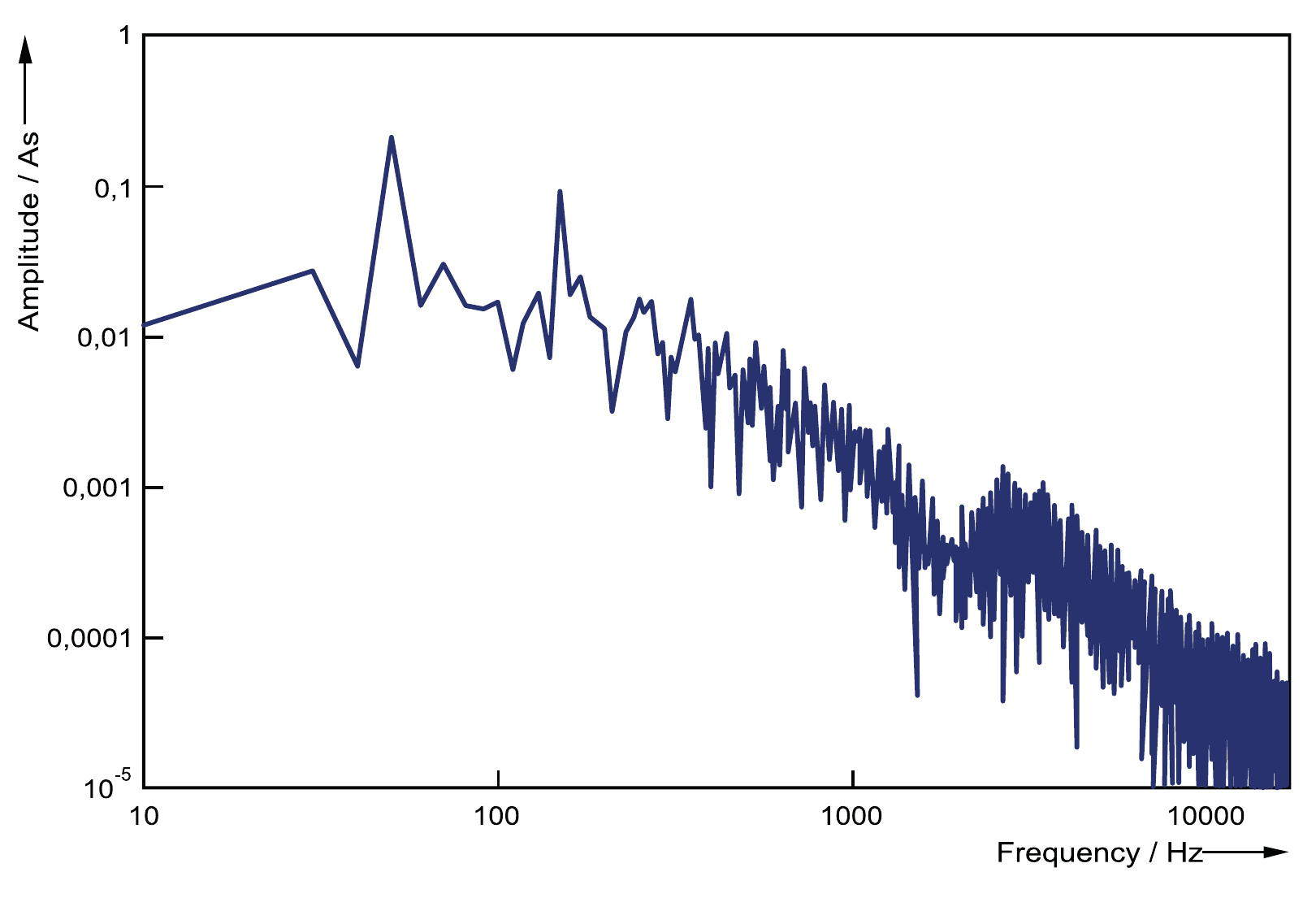
Figure 1: Spectral analysis of parallel arc fault. Highest peak is 50 Hz. The 3rd harmonic is comparable high. The current level is elevated over the whole frequency spectrum from 100 Hz to 10 kHz.
It is worth noting that different types of arc fault breakers may have slightly different characteristics or methods of sensing arc faults. For example, some may use different algorithms or filter settings to minimize false trips, while others may incorporate additional features, such as ground fault protection or advanced diagnostics.
Most building wiring systems have a “ring” frequency often within the same range. By ring frequency, we mean that the wiring will reverberate like a tuning fork hit with a hammer when there are power disturbances on the electrical system. Large motors, like a vacuum cleaner, can cause ringing. Of more interest are variable frequency drives: more and more air conditioning systems and pool pumps use variable frequency drives, which also generate high-frequency noise (harmonics) that can be in the range of arc fault detection algorithms.
Push-In Wiring
Inside the home, push-in wiring to electric sockets can potentially cause arc fault breaker trips, particularly if the connections are not secure or if the wiring is damaged. Push-in wiring is a type of wiring where the wire is inserted into a hole or slot on the back of the socket, rather than being connected using screws.
One issue with push-in wiring is that it can sometimes create loose connections, which can result in arcing. Arcing occurs when electricity jumps between two conductors, which can create a spark or small explosion. This can trigger the arc fault breaker and cause it to trip.
Another potential issue with push-in wiring is that the wires may not be properly stripped or may be damaged during installation, which can also lead to arcing and tripping of the arc fault breaker.
This is why the homeowner’s electrician should test the circuit and change to screw-type connections instead of push-in wiring whenever possible, as screw-type connections generally provide a more secure and reliable connection.
Block Diagram of What’s Inside
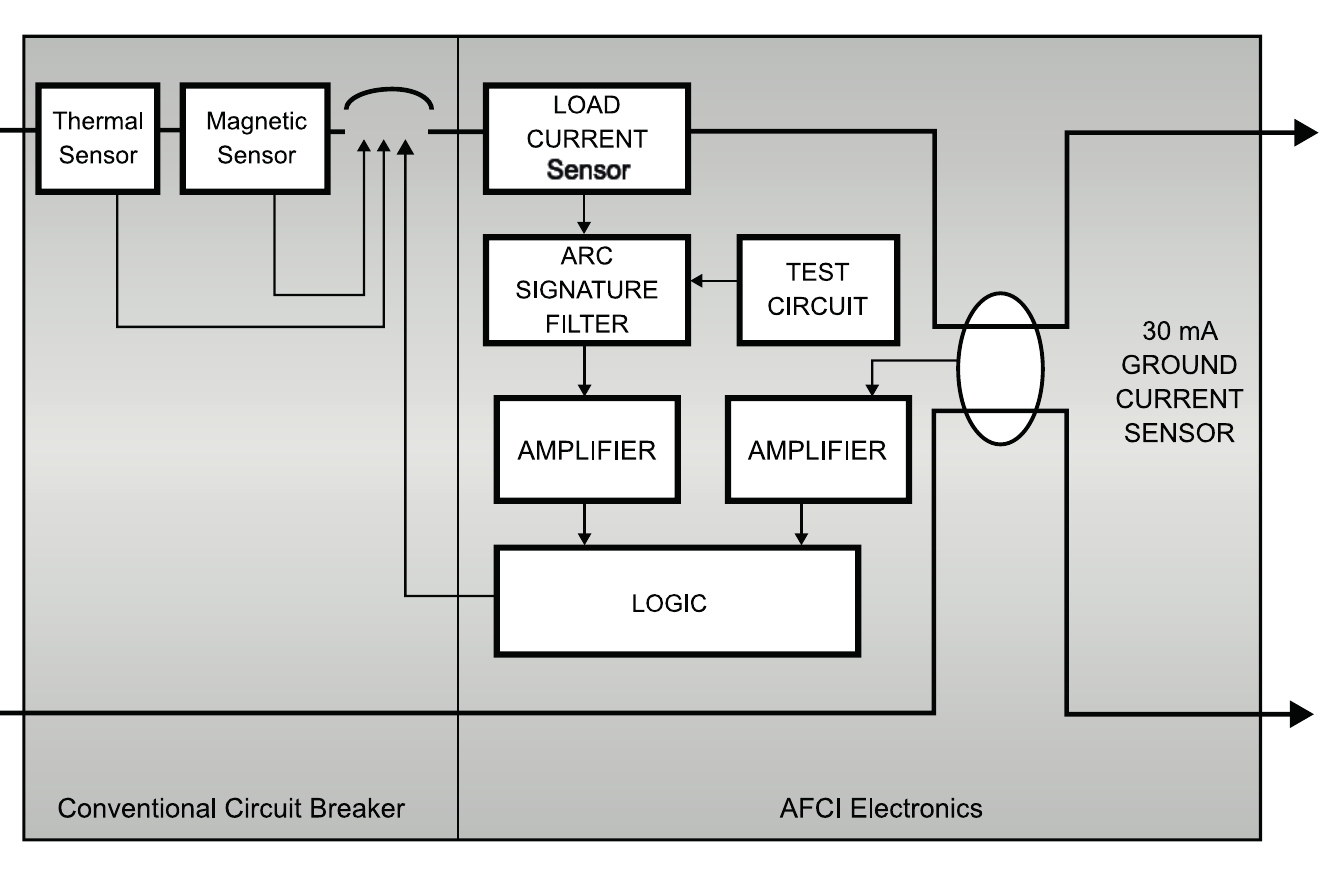
Here’s a diagram of the internal components of an arc fault breaker. It is complex and has a microprocessor inside. What may not be recognized quickly is that the microprocessor circuit includes a power supply (not shown in the diagram) to convert power to the low-voltage DC the electronics need. This conversion creates heat and so arc fault breakers will run warmer than normal breakers.
Questions?
Please contact us if you have questions about this article or a particular issue that you need help with.
Email: Solutions@kenick.com