
Protecting Convenience Stores from Transient Surge Damage
A practical guide to mitigating transient surge damage and lost revenue in convenience stores.
The risk of transient surge damage to convenience stores is significantly higher than in a typical office due to several design issues. This white paper provides information that can be used to mitigate damage and lost revenue resulting from a transient surge event.
Electrical Service and Store Expansion
Convenience stores provide a convenient stop for customers who need an item from the grocery store or want a quick snack on the way to their destination.
Most convenience stores are served by their electric utility with single-phase 120/240-volt service. This service voltage is relatively easy to manage and, although somewhat less efficient, the costs of panels, breakers, compressors and motors are significantly less than three-phase equipment.
Over time, many convenience stores expand their service levels by adding coffee bars, pizza stations and a wider range of chilled products. These additions can increase electrical demand. The white paper describes situations where electrical panels have become significantly overloaded.
Any installation of new equipment should include a review by a qualified, licensed electrician who can check loads and wiring and determine whether the electrical service capacity is sufficient to support the additional equipment.
Canopy Structures and Lightning Exposure
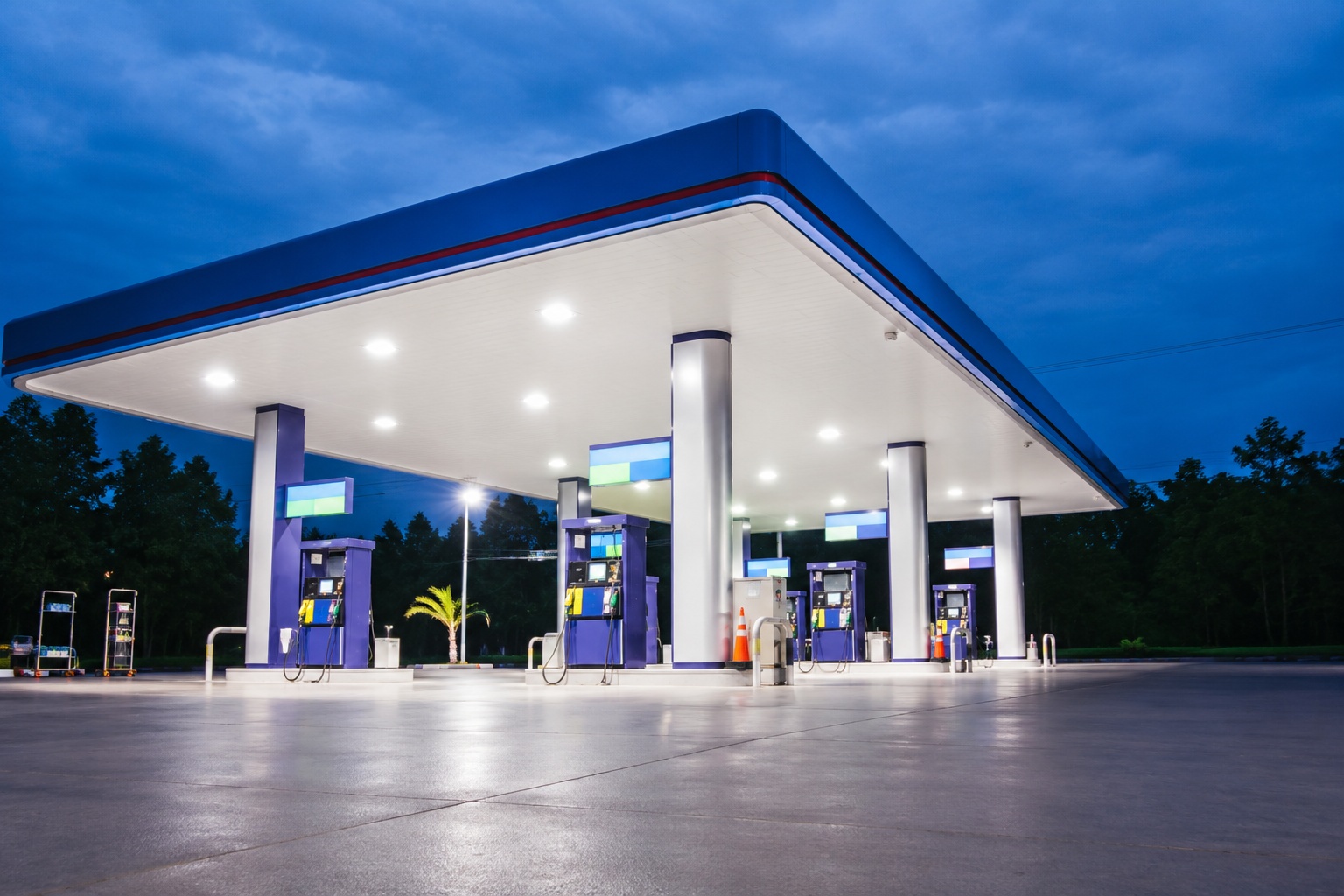
The design of convenience-store structures and increasingly tall canopy sizes can increase the risk of a lightning strike to the canopy. A strike may then travel through metal structures and communication or power wiring in search of an earth-ground path.
Recommendations for Reducing Transient Surge Damage
The white paper offers the following recommendations to help mitigate the risk of transient surge damage to a convenience store.
- Consult with a qualified engineer to make sure the building and canopy structures are properly grounded according to the National Electrical Code (NEC). The white paper cautions that adding ground rods without properly evaluating the grounding system can make matters worse rather than solve the problem.
- Install a hard-wired surge protector on the load side of the main electrical feed to the facility.
- Install additional hard-wired surge protection on all panels serving canopy lights and gas pumps.
- Locate the panel that provides power to outdoor signs and install a small surge protector on each circuit breaker supplying those lights.
- Contact the gas-pump-controls manufacturer, such as Gilbarco or Veeder-Root, for recommendations or available surge-protection kits for wiring between the gas pumps and the main building. The white paper recommends working with the pump manufacturer because surge protectors must be carefully selected for safe installation on the equipment.
- Purchase true online (double-conversion) battery backups for critical loads, including gas-pump controls and card readers, cash registers, and other revenue-producing microprocessor-based equipment. The white paper suggests considering one larger unit versus several smaller units.
- Use quality surge-protection power strips with existing or new battery backups.
- Verify that each cooler and HVAC compressor has an operational “time delay upon restart” protection module. These devices help prevent a compressor from restarting while refrigerant pressure is high after a momentary power interruption. Typical delay times are 3 to 5 minutes after power is restored.
- Visually inspect the area around the utility electric meter and ground rod to make sure the soil is typically dry. The white paper notes that a damp area around the ground rod can attract transient surge energy as storms approach.
Protecting Revenue-Producing Equipment
Convenience stores depend on equipment such as gas-pump controls, card readers, cash registers, refrigeration systems and other microprocessor-based devices to serve customers and generate revenue.
Combining properly evaluated grounding, hard-wired surge protection, protection for outdoor circuits, and battery backup for critical loads can help reduce the risk that a transient surge event will interrupt store operations.
About KENICK, Inc.
KENICK, Inc. has been providing surge protection products and solutions to the electric utility industry for over 32 years. Its facility includes a research laboratory where surge protection products can be tested against small, medium, large and extreme transient surge events.
Questions?
Please contact Kenick if you have questions about this article or a particular issue you need help with.
Email: Solutions@kenick.com